Live data · updated daily
10-year Treasury yield: latest close, history and meaning
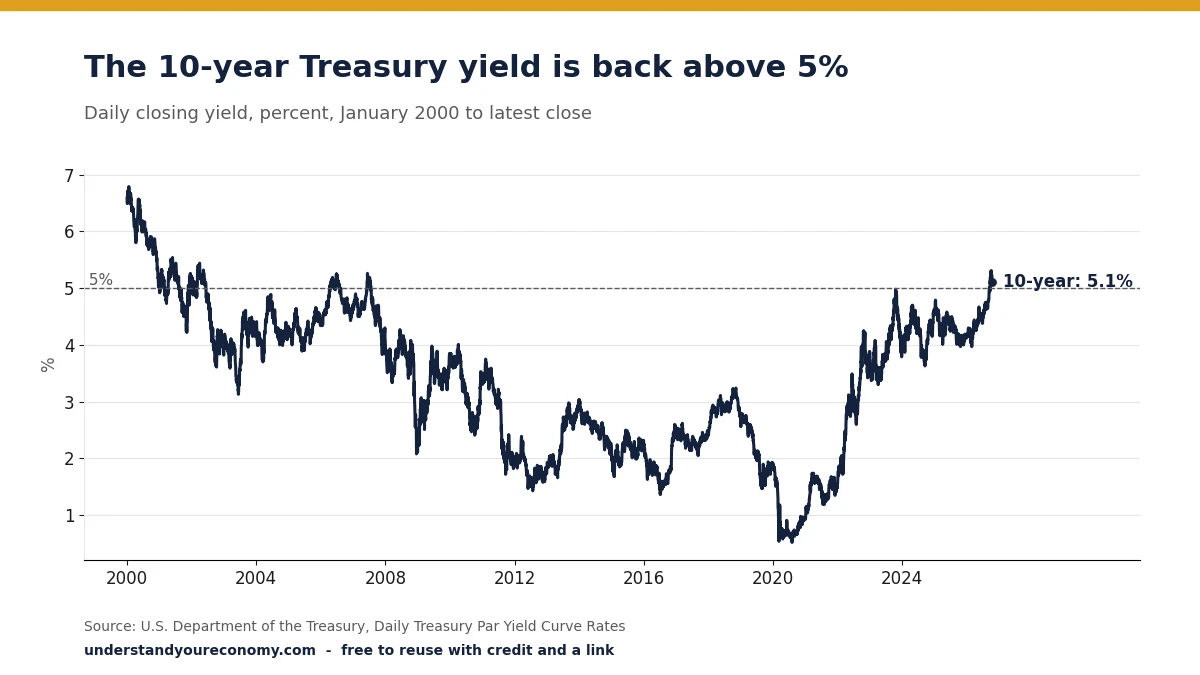
The US 10-year Treasury yield closed at 5.10% on October 15, 2026, according to the U.S. Treasury's daily par yield curve rates. The yield is the yearly return on US government bonds repaid in ten years. It is the benchmark that much of the country's long-term borrowing, including mortgages, is priced from.
What changed this release
The yield fell 0.09 percentage points from its October 14, 2026 close of 5.19%. It is now 0.21 points below this year's peak close of 5.31% on October 5, 2026, the highest since May 2002, based on the U.S. Treasury's daily yield curve data. The yield first closed at 5% on September 15, 2026.
How is this number measured?
The Treasury publishes one closing yield per business day for each maturity. It is a "constant maturity" yield: the Treasury estimates what a bond repaid in exactly ten years would yield, based on prices near the end of the trading day. Market news sites sometimes quote a slightly different number, because they use a live price taken at another time of day. We use the Treasury's own close so the figure always matches the official record.
Why does the 10-year yield matter?
When the 10-year yield rises, the cost of long-term loans tends to follow. Freddie Mac's weekly survey put the average 30-year fixed mortgage rate at 7.40% in the week of October 8, 2026, the highest since November 2023, according to Freddie Mac's Primary Mortgage Market Survey.
For a full explanation of how yields work and what pushes them up, read our guide to bond yields. For why rising yields cut the price of bonds people already own, see why bond prices fall when interest rates rise.
Update log
- : Page created with the October 15, 2026 close.
Researched from the official sources linked in this article and drafted with AI assistance. Fact-checked by the Understand Your Economy editorial team on October 15, 2026.
This article is general educational information, not personalised financial, investment, tax or legal advice. Consider speaking with a qualified professional about your own situation.
No paid links in this article.
Spotted an error? Tell us and we will correct it.