Explainer
The rule of 72: how fast inflation cuts your money
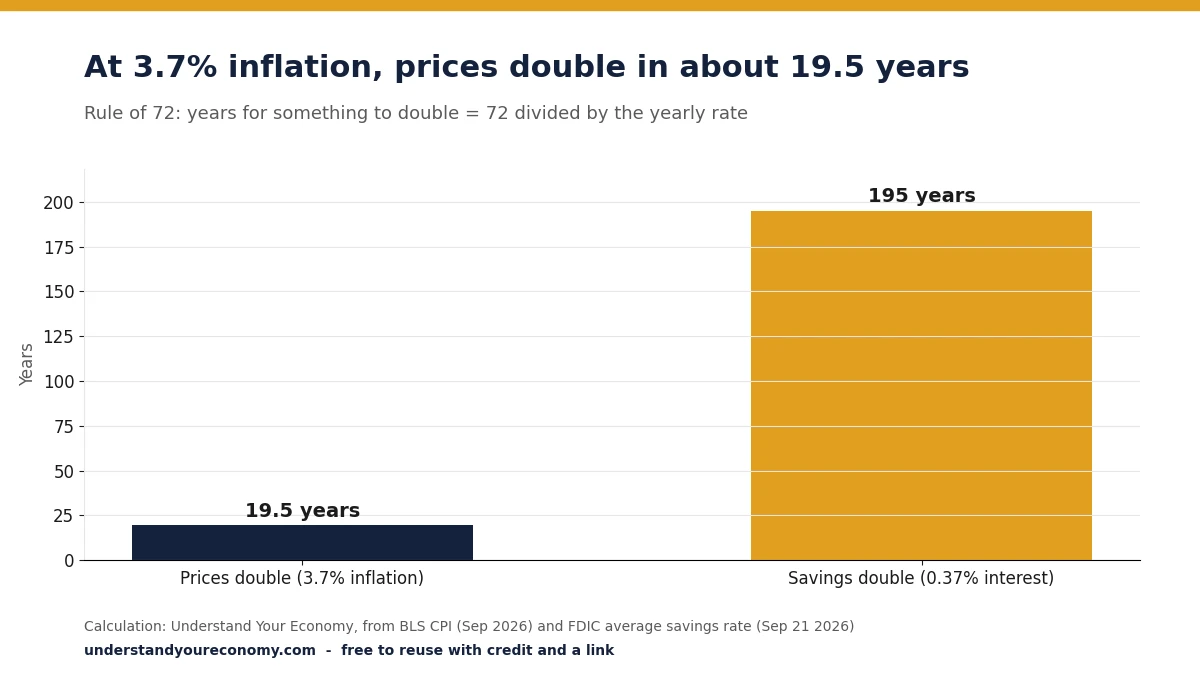
The rule of 72 says that if you divide 72 by a yearly rate, you get roughly how many years it takes something to double. With US inflation at 3.7% in September 2026, according to the U.S. Bureau of Labor Statistics, prices would double in about 19.5 years. Our guide to inflation covers the basics.
How does the rule of 72 work?
Growth compounds: each year's increase builds on the last. The rule of 72 is a quick way to estimate that without a calculator. It works for anything that grows at a steady rate, including prices, savings and debt. It is an estimate, not an exact answer.
The savings rate is the national average of 0.37% as of September 21, 2026, from the FDIC.
Why does this matter for your money?
Small differences in yearly rates turn into big differences over time. A rate that looks harmless in one year can halve the buying power of cash over a working life. That is why the gap between your savings rate and inflation matters more than the size of the balance. See how inflation shrinks your savings for a one-year example in dollars.
What this means for you
- Divide 72 by the inflation rate to see roughly how long until prices double.
- Divide 72 by your savings rate to see how long until your money doubles, and compare the two.
- Check the latest inflation rate on our inflation tracker.
Researched from the official sources linked in this article, drafted and fact-checked by the Understand Your Economy editorial team on October 16, 2026.
This article is general educational information, not personalised financial, investment, tax or legal advice. Consider speaking with a qualified professional about your own situation.
No paid links in this article.
Spotted an error? Tell us and we will correct it.