In depth
Inflation explained: why prices rise and what it costs you
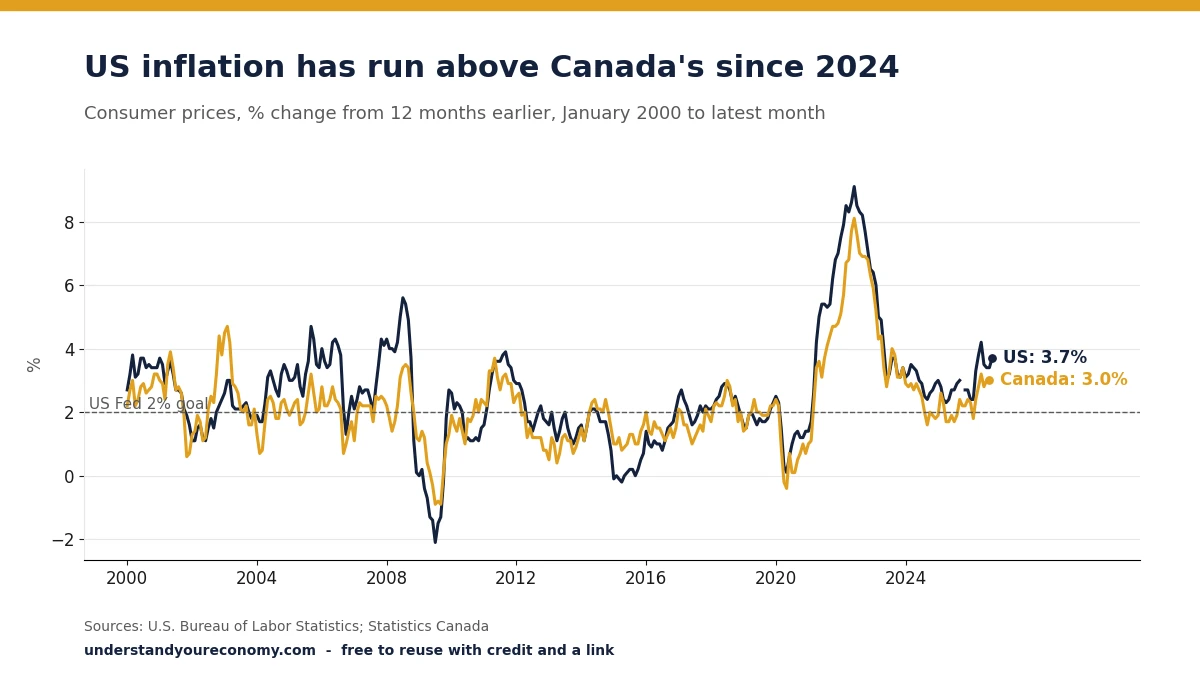
Inflation is the rise in the prices of everyday goods and services over time, measured as a percentage change from a year earlier. US consumer prices rose 3.7% in the 12 months to September 2026, according to the U.S. Bureau of Labor Statistics. In Canada, prices rose 3.0% in the 12 months to August 2026, according to Statistics Canada.
What is inflation?
When prices rise, each dollar buys a little less than it did before. Inflation measures how fast that happens. An inflation rate of 3% means that, on average, the things people buy cost 3% more than they did a year earlier.
A little inflation is normal. The Federal Reserve aims for inflation of 2% a year over time, a goal it reaffirmed in January 2026, according to the Federal Reserve's statement on longer-run goals. Trouble starts when prices rise much faster than pay and savings.
How is inflation measured in the US and Canada?
Both countries use a consumer price index (CPI), which tracks the cost of a large basket of things households buy: food, rent, fuel, clothing, transport and more. The US Bureau of Labor Statistics and Statistics Canada each price that basket every month and report how much it costs compared with a year earlier. For more detail on the latest readings, see our US and Canada inflation tracker.
| United States | Canada | |
|---|---|---|
| Inflation, 12 months to August 2026 | 3.4% | 3.0% |
| Gap | 0.4 points higher in the US |
Sources: U.S. Bureau of Labor Statistics and Statistics Canada, August 2026. Source: Statistics Canada, Table 18-10-0004-01, August 2026. Reproduced and distributed on an 'as is' basis with the permission of Statistics Canada.
We compare August because it is the latest month both countries have reported. The two indexes are built in a similar way, but each country chooses its own basket and weights, so a small gap between them is not a precise measure of which country is more expensive.
Why are prices rising in 2026?
Energy is the main reason. US energy prices rose 20.4% in the 12 months to September 2026, and gasoline rose 34.2%, according to the Bureau of Labor Statistics. Gasoline alone accounted for more than half of the monthly rise in prices in September 2026.
Leave out food and energy, and US prices rose 2.6% in the 12 months to September 2026, a measure called core inflation, according to the Bureau of Labor Statistics. That gap tells you this is mostly a fuel story rather than prices rising across the board. We explain the difference in what is core inflation.
What does inflation do to your money?
That loss hits savings hardest. When the interest on your savings is lower than inflation, your money buys less every year even though the number in your account goes up. See how inflation shrinks your savings and how to estimate the damage with the rule of 72.
How do central banks fight inflation?
Central banks raise interest rates to cool spending and borrowing, which slows price rises over time. On September 16, 2026 the Federal Reserve raised its target range for short-term rates to 3.75-4.00%, saying inflation was still above its goal, according to the Federal Reserve. The Bank of Canada held its policy rate at 2.25% on September 2, 2026, according to the Bank of Canada.
What this means for you
- Your money buys less each year. When prices rise faster than your pay, a raise can still leave you worse off.
- Savings need to earn more than inflation just to keep their buying power.
- Fuel moves the headline rate most right now, so the cost of filling a tank is a big part of what people feel.
We update our inflation tracker every time the US and Canada release new numbers.
Researched from the official sources linked in this article, drafted and fact-checked by the Understand Your Economy editorial team on October 16, 2026.
This article is general educational information, not personalised financial, investment, tax or legal advice. Consider speaking with a qualified professional about your own situation.
No paid links in this article.
Spotted an error? Tell us and we will correct it.