Explainer
What is core inflation, and why does it matter?
Core inflation is the rise in consumer prices with food and energy left out. In the US it was 2.6% over the 12 months to September 2026, compared with 3.7% for all items, according to the U.S. Bureau of Labor Statistics. Our guide to inflation explains how both are measured.
Why leave out food and energy?
Food and fuel prices jump around with the weather, wars and oil markets. A bad harvest or a spike in gasoline can push the headline rate up for a few months and then fade. Leaving them out shows the slower, steadier trend in everything else people buy, such as rent, clothing and services. Central banks watch core inflation closely for that reason.
What does core inflation show in 2026?
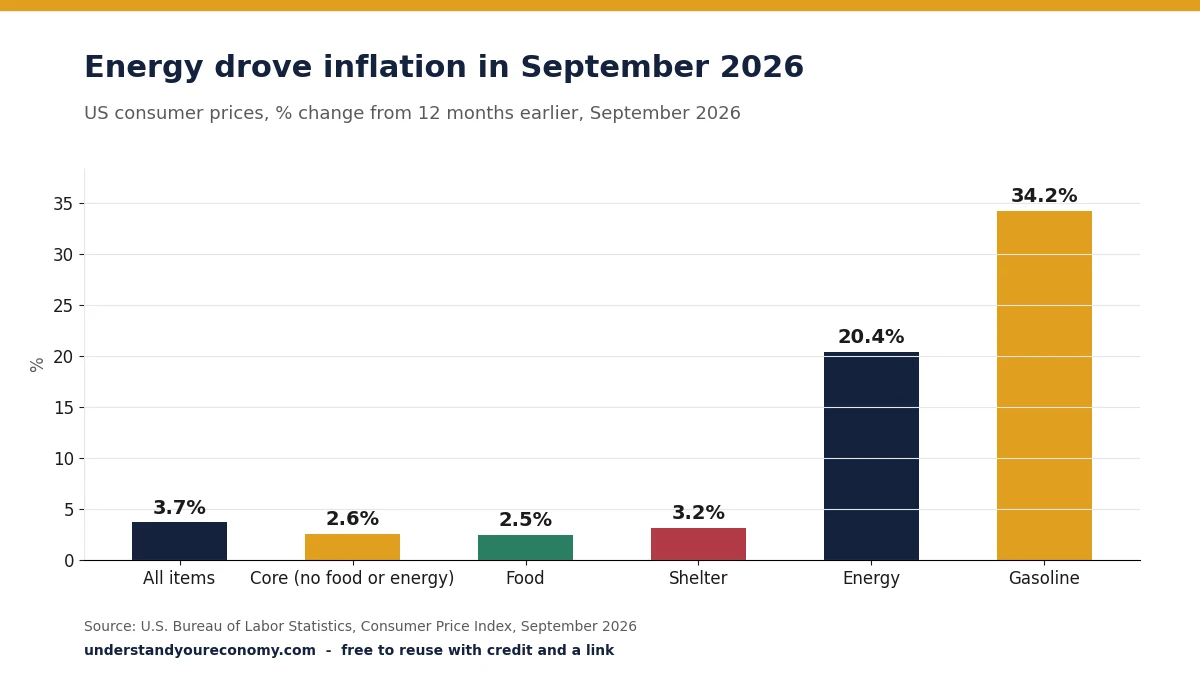
In September 2026 the US headline rate was 1.1 points above core, and energy explains most of that gap. Energy prices rose 20.4% and gasoline 34.2% over the 12 months to September 2026, while food rose 2.5% and shelter 3.2%, according to the Bureau of Labor Statistics. Core inflation was 2.4% in August 2026, so it also edged up in September.
Does core inflation mean my costs are lower?
No. Core inflation is a measure for spotting trends, not a picture of your budget. If you drive a lot or heat your home with oil or gas, your costs have risen faster than the core rate suggests. The headline number, which includes food and energy, is closer to what most households pay. See how inflation shrinks your savings for what that means for money in the bank.
What this means for you
- Headline inflation is what you pay; core inflation is what economists watch for the trend.
- A big gap between the two usually points to a fuel or food shock rather than prices rising everywhere.
- Track both numbers on our inflation tracker.
Researched from the official sources linked in this article, drafted and fact-checked by the Understand Your Economy editorial team on October 16, 2026.
This article is general educational information, not personalised financial, investment, tax or legal advice. Consider speaking with a qualified professional about your own situation.
No paid links in this article.
Spotted an error? Tell us and we will correct it.